
Agricultural and food industries face mounting pressure to manage nutrient-rich waste streams more effectively. Excess nitrogen and phosphorus from manure, digestate, food waste, and wastewater continue to fuel harmful algal blooms, degrade waterways, increase treatment costs, and create financial and operational burdens for farms, processors, communities, and downstream industries.

According to the USDA, U.S. livestock and poultry operations generate more than 1.4 billion tons of manure annually . On top of this, the nation’s food and beverage sector adds tens of millions of tons of nutrient-rich food waste each year, much of it from manufacturing and processing facilities. Industry-wide estimates indicate that the industrial food system accounts for nearly 40% of total U.S. food waste, creating substantial pressure on land, water, and waste management infrastructure. These combined waste streams are often applied to farmland in excess of crop nutrient needs, driving runoff and water quality degradation.
The impact is widespread: from Chesapeake Bay in Maryland, to the Great Lakes spanning Michigan, Ohio, New York, and Ontario, to Lake Champlain bordered by Vermont, New York, and Quebec, and southward to Florida’s nutrient-polluted waterways, including Lake Okeechobee and coastal estuaries that regularly experience toxic blooms. Further downstream, nutrient inflows contribute to the large seasonal “dead zone” in the Gulf of Mexico.
The EPA reports that nutrient pollution has triggered harmful algal blooms in all 50 states and has contributed to more than 166 documented “dead zones” in U.S. waters , where aquatic life cannot survive. These ecosystems represent not only critical natural resources but also key economic engines for fisheries, tourism, property values, and regional industries, all of which are under increasing stress from unmanaged nutrient pollution.
This water pollution also drives up drinking water treatment costs and creates financial risks for both communities and producers. Farmers can spend tens of thousands of dollars annually on compliance with environmental regulations, and proposed policies such as the U.S. Farm System Reform Act envision penalties of up to $10,000 per violation per day for large operations. Together, these pressures highlight the need for practical, scalable technologies that prevent nutrients from becoming pollutants in the first place. GSR’s nutrient recovery platforms are designed to help address this gap by recovering nutrients from residual waste streams before they become water-quality liabilities.
Even over a decade ago, the scale of the challenge was substantial. According to Food & Water Watch, livestock and poultry on the largest factory farms produced an estimated 369 million tons of manure in 2012—almost 13 times more than the waste produced by the U.S. human population at that time.[1] While household waste is typically treated through municipal sewer systems, most factory farm manure is stored in lagoons and ultimately applied, largely untreated, to farm fields as fertilizer. Globally, roughly one-third of food produced for human consumption is lost or wasted , amounting to on the order of more than a billion tons of food each year, worth around $1 trillion . [2] Without better nutrient management and recovery tools, these waste streams continue to drive water quality and climate challenges.
To see how GSR applies nutrient recovery in real farm and digester settings, visit our Featured Projects.
Nutrient runoff from agriculture has been widely blamed for causing algae blooms in natural water bodies worldwide. These excessive nutrient levels not only fuel algae growth but also impose significant financial burden on drinking water treatment. Moreover, they negatively impact tourism and recreation industry, commercial fishing industry, property values, and pose health risks to humans, pets, and the environment.
As per the Environmental Protection Agency (EPA) :

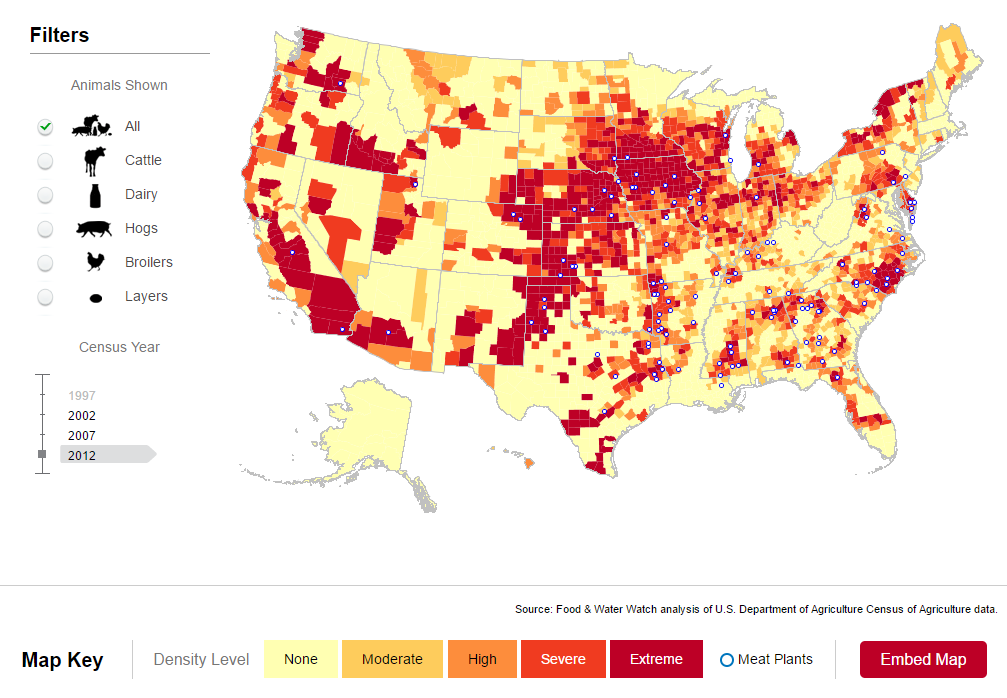 Photo source: Food &
Water
Watch
Photo source: Food &
Water
Watch
This problem was already substantial over a decade ago. According to an analysis of USDA figures by
Food & Water Watch
,
livestock and poultry on the largest factory farms produced an estimated
369 million tons of manure in 2012—almost 13 times more than the
waste from the entire U.S. human population.
[1]
This 13.8 billion cubic feet of manure is enough to fill the
Dallas Cowboys
stadium
133 times.[2] Household waste produced in most
U.S.
communities
is treated
through municipal sewer systems, but factory farm manure is
stored in lagoons
and
ultimately
applied, untreated, to farm fields as fertilizer (Food &
Water
Watch).
Globally, about one-third of food is wasted: 1.6bn tonnes of
produce per year,
with a value of about $1 trillion. If this wasted food were
stacked in
20-cubic-meter
skips, it would fill 80 million of them, enough to reach all
the
way to the moon
and
encircle it once over[3].
[1] USDA National Agricultural Statistics
Service.
2012 Census of
Agriculture. United States Summary and State Data at Tables
11, 12 and 20; Food & Water Watch calculation comparing
human
and livestock
waste production
based on EPA (2004) at 9.
[2] USDA Natural Resources Conservation Service.
“Agricultural Waste
Management Field Handbook.” Chapter 4, Agricultural
Waste Characteristics. March 2008 at 4-12 to 4-20; Dallas
Cowboys. [Press
release]. “Dallas Cowboys
Stadium Design Statement.” December 12, 2006.
[3] Half of all US food produce is thrown
away.The
Guardian. Jul 2016
GSR works with farms, anaerobic digester operators, food and beverage facilities, utilities, and project partners exploring nutrient recovery, water-quality improvement, and value creation from residual streams.
Discuss a Project with GSR
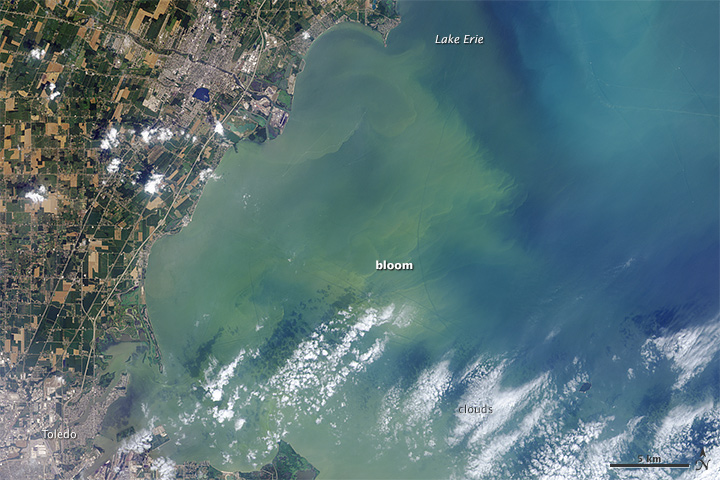 Photo
source: NASA’s Earth
Observatory. Algal bloom in the Gulf of America / Gulf of Mexico.
Photo
source: NASA’s Earth
Observatory. Algal bloom in the Gulf of America / Gulf of Mexico.